
To say that I am a vintage Datsun & Nissan car enthusiast is simply an understatement. I have been referred to as a Datsun nut, racing historian, collector, aficionado, vintage racer, restorer, amongst others. While I may be many of those things, at the end of the day I am simply someone who fully embraces the marque—living and breathing it every single day. Now with that out of the way, I suppose we should start from the beginning. The beginning of my obsession and disease that has resulted in more than half of my life being consumed by Japanese automobiles and going stupid fast in them.
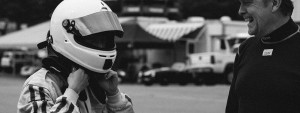
Glenn Chiou
archive
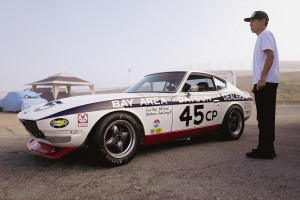
2023: Rolex Monterey Motorsports Reunion - HLS30-19929 fully restored in its first “Bay Area Datsun Dealers” livery.
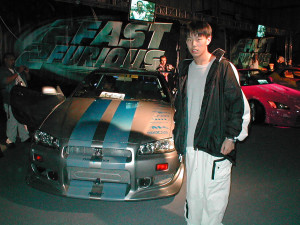
April 2003: Hot Import Nights in San Mateo, California.
Simply and shamelessly put, I am a Fast and the Furious bred millennial. From the first time I inserted that first franchise film into a DVD player, I was absolutely hooked. From Paul Walker’s neon green Mitsubishi Eclipse, to the infamous orange fourth generation Supra, to the sleek red FD RX-7, yellow R33 GTR, I loved them all. That began my obsession with tinkering with perfectly good unmodified cars in an attempt to make them go faster or look more stylish, sometimes accomplishing both, sometimes neither. I grew up on JDM cars, and while I have dabbled in many makes and models, I have never strayed too far from them. I will proudly say that I have always been an “OEM plus” kind of guy, even before the term was coined. None of my road cars have ever had “Altezza” lights, underglow, ungodly overly customized interiors, or even a fart can muffler. I would like to think my modding style has always been a factory look, with maybe some subtle body changes, but it was always backed up with performance. I do believe you can “over modify” a car. I have fully embraced the JDM culture of modifying and building cars throughout my first forty years on this planet. For the sake of sparing the audience from a long list of what probably exceeds 30 cars and the stories that go with them, I’ll focus on the three that really shaped my passion into what it is today.
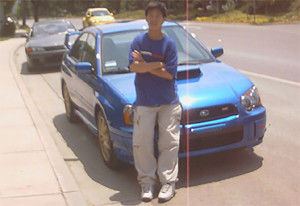
First "tuner" car
It all started with my first “tuner” car - the 2004 Subaru WRX STi. In all its World Rally Blue and gold BBS wheel glory, it was an absolute beast. The car probably, no, definitely was way too much car for a teenager in the early 2000’s when movies like the Fast and the Furious, and Gone in 60 Seconds were gracing theaters across the world. Nonetheless, from the rumble of the boxer engine and unequal length headers, to that silky smooth 6 speed transmission, to the unnecessarily massive rear spoiler and hood scoop, to flashy blue Alcantara seats, I took it all in and I absolutely thought it was epic. Going 0-60 in 4.5 seconds in 2004 was no joke, and there were plenty of smiles to be had. Needless to say, that car received the full JDM treatment over the course of my six-year ownership. The mod list included an FP Green turbo, larger injectors and intercooler, Cusco Zero 2R coilovers, wider JDM “Spec C” anthracite BBS wheels with sticky tires, a Borla exhaust, a Helix downpipe, and plenty of other odds and ends that time has since blurred together. The STi was fully tuned via a Cobb Accessport by the old-school shop GST Motorsports in Hayward, California, renowned for their Time Attack GC8.
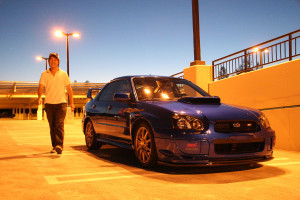
August 2005: Evening photoshoot with friends.
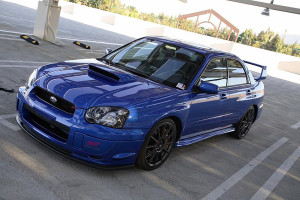
August 2006: Same parking lot as prior photo, one year later. Note the fresh Spec C wheels!
What a time to be in the car scene… no ridiculous burn-outs at cars and coffees and no reckless side shows. While Northern California car culture had our own ideas of fun, such as local street racing, aka “the runs,” many of us spent our evenings at local car meets. These meets, which were often organized through online car forums, were often held at local Krispy Kreme donut locations, In-n-out burgers, boba shops, or my favorite; San Bruno’s Eggettes, a Hong Kong-style waffle shop. Thursday nights at Eggettes in San Bruno was always an exciting time for me. Located about 30 miles north of my hometown, it had all the great makings of a car meet: far enough that I could go on a drive, a full parking lot of tuner cars, great snacks and drinks (in this case boba and little waffles in the shape of eggs), and most importantly - passionate like-minded enthusiasts. These early 2000’s car meets are where I first experienced car enthusiast camaraderie, which little did I know at the time, would pave the way for many lifelong friendships. This was definitely my true happy place.
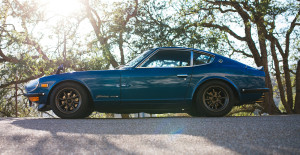
2015: HS30-10052, Courtney Cutchen Photography.
My Fairlady
Simply put, this is the car that started this Z obsession of mine. While I had already owned two early 240Z’s before this find, HLS30-005998 and HLS30-11651, this car effectively started a snowball effect for me that would shape the next fifteen plus years of my life. It all started in the summer of 2010, when I became aware of an October 1971 production dated Nissan Fairlady 240Z-L model that was sitting dormant for eighteen years in the Santa Cruz Mountains of California. The Z was owned by a devoted—some might say crazed—Datsun 510 fanatic and the president of the Northern California chapter of the 510 United Five Ten Owners Club (NorCal UFO). Among his collection of more than forty cars, this Z never rose to the top of the priority list, even after nearly two decades of ownership. That was likely because he simply wasn’t into Z cars and felt it was rather silly to drive a right-hand-drive car in the United States. The car was originally imported in 1973 by an ex Airforce Lieutenant out of Yokota Airbase, Western Tokyo.
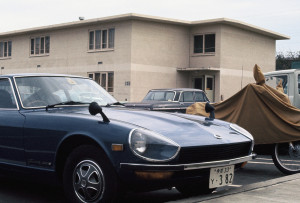
1973: HS30-10052 while its owner was stationed at Yokota Airbase in Fussa, Tokyo, Japan. Courtesy of D. Zabel.
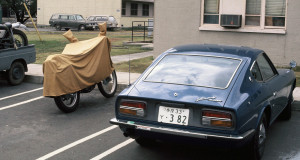
1973: HS30-10052, the Japanese "Y" plate was a special vehicle registration plate issued to U.S. military personnel stationed in Japan. Courtesy of D. Zabel.
After connecting with the owner on HybridZ.com, I had arranged a visit to Ben Lomond, a small town nested in the California Santa Cruz Mountains. After a short tour of his collection, we soon walked up to what could easily be made out as a covered early Z under a sketchy self-constructed car port that probably housed eight or so cars. I still remember the distinct look of the fender mirrors poking up the car cover. The owner soon unveiled the car by removing the cover, and there in front of me sat a car that at the time I would not expect to share so many great life long memories with.
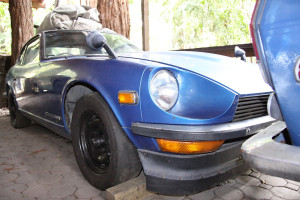
2010: HS30-10052’s first uncovering after 18 years of sitting in the Ben Lomond, California.
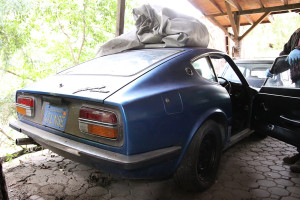
2010: HS30-10052 still wore its original paint and was for the most part, all factory.
The car was tired, the paint was in desperate need of polishing. It was filled with black widow spiderwebs but had all the makings of a great project car. Then came the matter and process of actually acquiring the car. I would learn years later that I was extremely lucky to have been able to acquire this vehicle from the owner, as his cars were always “for sale” but never seemed to actually make it in the hands of new owners. I don’t blame him and can definitely relate. If it was not for the convincing by his kind wife, who also competed heavily in a Datsun 510 in autocross competition, I probably would never have had the opportunity. After the first visit, I was sold on the car and communicated my interest to purchase the vehicle. The owner, however, had seller’s remorse and difficulty coming to peace with the idea of letting the car go (or what seemed like the meaning of life). Even after a couple months of email exchanges, the owner was reluctant to sell and had gone dark on multiple occasions. It was not until I made the trek 50 miles south to their local NorCal UFO autocross event in Marina, California, to practically beg the owner to allow me to purchase the car. I realize now that it may have come off as just short of stalking. Several weeks of silence later, I received an email from the owner saying that he would let it go and told me I had his wife to thank. To this day, I am still not quite sure what changed his mind but I can only guess that his wife pressed him that the car should go to this young man who showed a strong commitment to doing it justice. The only contingency of the sale was that the owner wanted to be involved in getting the Z back on the road, and requested that I make the needed journeys to Ben Lomond to work on the car. This was actually what I preferred, as at the time, even though I had worked on my own cars for probably just short of a decade, I lacked the proper tools and vintage car knowledge to get the car going.
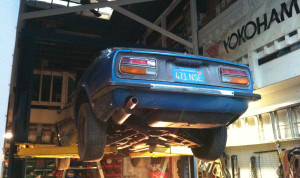
2010: HS30-10052 shortly after purchase, as we began the journey to bring her back to road worthiness.
I spent the better part of the Fall of 2010 playing hooky from my day job and spent late evenings traveling back and forth between my home in Los Altos to Ben Lomond, California to work on the car. The owner’s workshop was a thirty plus mile drive through the winding roads of California State Highway 17, a road that Northern California car enthusiasts are well familiar with for its banked dangerous high speed twists and turns. The owner had been autocrossing and racing Datsuns for forty years. He was an early Intel engineer and had built many cars from the ground up. His workshop resembled every car enthusiasts’ dream mancave. Amongst all his builds, I distinctly remember a V8 powered Datsun 510 autocross car built from the ground up for the famous “Duel of De Anza”, an annual autocross event held at a local community college in Cupertino, California. His two story workshop shelves were lined with Datsun parts mimicking that of a dealer parts department. The motor and parts room was on the second floor, while the workshop was on the first floor. He even built a gated opening between the first and second floor, with an auto lift at the center of it so that he could easily lower motors down from the top floor into each car. It was the perfect setup.
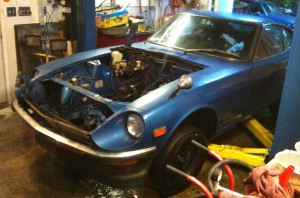
2010: HS30-10052 - We removed the motor in order to easily freshen up everything.
The L28 that had been swapped in at some point was going to be replaced with an original L24.
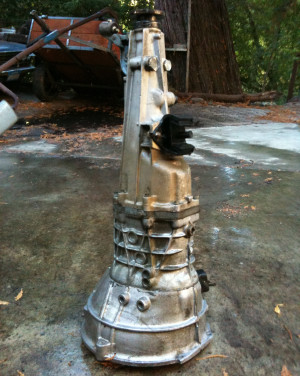
2010: HS30-10052’s original five speed transmission receiving a good cleaning before reinstallation.
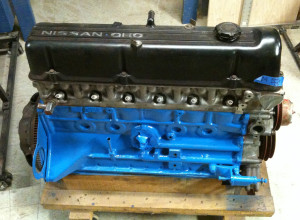
2010: L24 ready to be installed into HS30-10052 after a light freshen up.
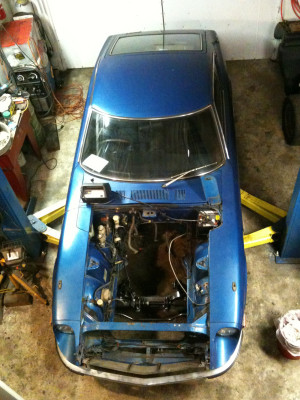
2010: A top view of HS30-10052 from the second floor of the previous owner’s workshop.
Dropping in the motor from the top sure made things easy!
It was during this time that I first met fellow s30.world members Katsuhiko (Kats) Endo-san and Alan Thomas over the internet. At the time, I admittedly had very little knowledge of JDM Fairlady Z cars. I spent countless hours and many thousands of shameless posts asking questions on classiczcars.com and HybridZ.com. Endo-san and Alan stood out as the undisputed experts of the early Z cars. I was often browsing through Endo-san’s Geocities personal homepage which, documented the restoration of his blue US market Series 1 Datsun 240Z and his holy grail, a silver 1971 Nissan Fairlady Z 432, I also studied Alan’s extremely detailed message board posts and his pursuit of historical accuracy. I took it all in and quietly built my own knowledge of these fascinating cars. In fact, it was Endo-san and Alan who helped me identify my Z as an early Fairlady 240Z-L, HS30-10052, with a production date of October 1971.
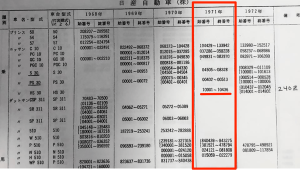
1971 Production HS30 cars fell within the range of 10001 to 10436. Courtesy of A. Thomas.
They educated me on the special differences on the car, and how Japanese emissions at the time loosened and allowed for the 2.4-liter L-series variant to be released to the market. The variant was often overlooked due to the fact that customers often opted for the grander sister car, the Fairlady 240Z-G. The Fairlady 240Z-G of course had the famous “G nose” and overfenders. If customers were going to pay a premium in higher emissions tax, they would rather go for the more unique car. I was also educated on the finer details such as standard extended carpet, US-model front grille, and headlight covers.
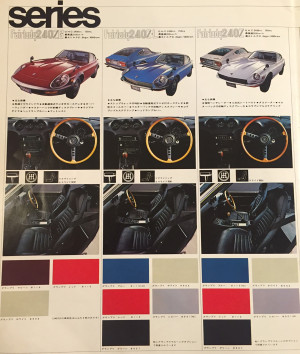
This very pamphlet that showed all the different trim levels was a part of a stack of documentation that came with HS30-10052.
While I am sure Endo-san and Alan do not see these as significant acts of kindness, these small gestures of kindness and generosity to share knowledge have undoubtedly helped shape my passion and strong sense of preservation for these cars. I too now endeavor to share as much knowledge as I can with fellow enthusiasts.
Then came the final day to fire her up. After three months of deep cleaning, light tuning of its 2.4-liter motor, overhauling suspension with new rubber, dampeners, springs, repairing degraded electricals, installing new ZTherapy carburetors, and other odds and ends, the Fairlady 240Z-L was ready for its first attempt at revival. We fed fuel to the car manually via a small bottle, had a new and fully charged battery connected, and started cranking. After several attempts, the Z car roared back to life after 18 plus years of deep hibernation. I could not have been more overjoyed. Just to hear the throaty carburetors breathing life into its 2.4-liter motor was an out of world experience for me. The car sounded healthy and was ready to live its best years ahead.
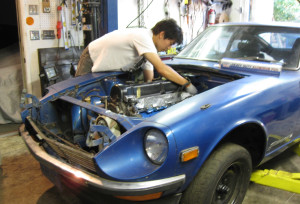
2010: 24-year-old me working on a vintage L series motor for the first time.
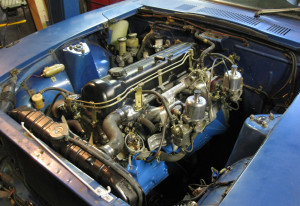
2010: Factory SUs installed and ready to breathe live again!
In the Fall of 2010, I not only received private lessons on how to work on and set up these early Z cars, but also learned how to properly handle specialized tools. For that I want to say that I am forever thankful to and in debt of the owner for his gracious time and guidance. Like most twenty-five-year-olds at the time, I could have been out drinking and partying but I had the red mist in my eyes and was absolutely determined to get her back on the road as soon as possible.
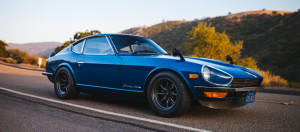
2015: Courtney Cutchen Photography.
Fast forward to 2015, five years after having completed the car. A relatively small social media outfit at the time, called Petrolicious, had shown interest in making a short film on the car. I was introduced to a friend and fellow enthusiast, Courtney Cutchen Photography. After arranging a date, I spent a full day with the very talented producers and cinematographers at Petrolicious to produce this short film:
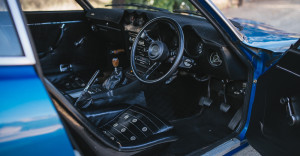
2015: Courtney Cutchen Photography.
What was extra special about this film was that we were able to film it on the very back roads I grew up driving on - California Highway 9, 35, and 1. The film has since received over six hundred thousand views on YouTube, a feat that I had never expected. Most importantly, I am happy to have played a small part in helping the public better understand our passion for these cars.
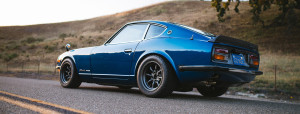
2015: Courtney Cutchen Photography.
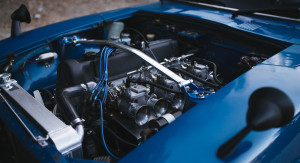
2015: Courtney Cutchen Photography.
Fifteen plus years later, the Fairlady 240Z-L remains in its permanent spot in my stable. It is my forever car. I am so grateful that this little HS30 Fairlady 240Z-L was not lost to time and has had the chance to be part of so many priceless memories. Although, at the time of writing, the car has been sitting for three years, she will soon emerge from hibernation - better than ever.
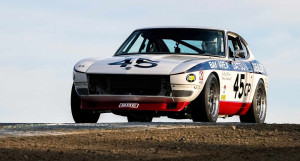
2023 Velocity Invitational at Sears Point, Sonoma, California.This was HLS30-19927’s first race after her second restoration. We restored her back to her original “Bay Area Datsun Dealers” livery, as run by FAR Performance from 1971 to 1972. HLS30-19927 is the first Datsun 240Z to run out of the SCCA San Francisco Region, driven by Walt Maas.
Road to the Monterey Historics
2010 was my first year attending the annual Rolex Monterey Motorsports Reunion, or often known as the Monterey Historics, held at Laguna Seca Raceway. Timing could not have been more perfect, as Datsuns were once again paving the way for Japanese cars, this time in vintage racing. At this event, they made their first big splash in what would lead to the next decade of regular Japanese historic racing car participation. Nine years after Datsun’s first debut at the world-renowned historic races in 2001, the famous BRE #46 Datsun 510 would make its return to compete in the Trans Am Under 2L and Two-Five Challenge run group. The famous racing Datsun would be piloted by none other than Datsun four-time racing champion and driver, John Morton. Morton had won this very class, SCCA Trans Am Two-Five Challenge, in 1971 and 1972. Other notable Datsuns in attendance that year were the ex-Paul Newman Datsun 240Z, and the Transcendental Racing ex Brad Frisselle 240Z.
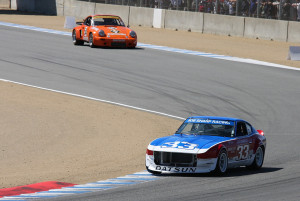
2011: ex-Bob Sharp / Paul Newman Datsun 240Z at the Rolex Monterey Motorsports Reunion, Laguna Seca.
While I had only personally begun participating in amateur track days that year in my road car, I cannot emphasize the effect that this 2010 event had on me. Seeing these museum pieces being flogged on the track began a relentless journey to one day participate in the event myself.
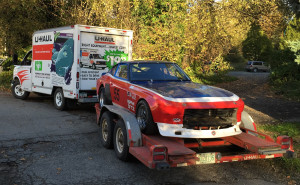
2014: HLS30-19927 shortly after she was discovered in Port Coquitlam, British Columbia, Canada.
Four years later in 2014, after many failed attempts, I finally acquired my first historic early Datsun 240Z. While the journey of my first Z racing car warrants a dedicated story in itself (please stay tuned!), it was the key to unlocking eligibility to the Monterey Historics and brought me one step closer to realizing that dream.
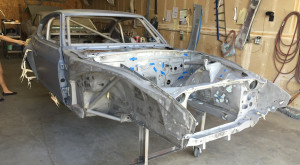
2015: HLS30-19927 after sandblasting at Customs by Miguel in Santee, California.
By 2016 and after a two year restoration, the ex Loren St. Lawrence VIPS Restaurant Datsun 240Z, was ready for prime time. The car had been meticulously restored - chassis completely stripped, blasted, straightened, painted to historic accuracy after many nights and hours of painstaking photographic research, and built to class rules. While Datsun historic racing cars were more regularly participating in the Monterey Historics at that point, they were still relatively uncommon. It was practically the same cars racing year after year. I submitted my application that year and received my first of four acceptance to participate in the prestigious event.
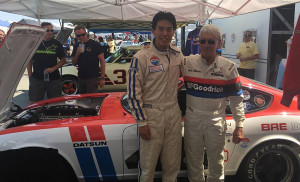
2017: A dream come true. Racing side by side with John Morton at the Rolex Monterey Motorsports Reunion, Laguna Seca.
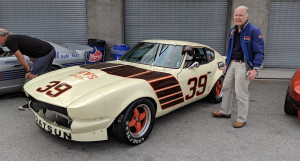
2018: Peter Brock of Brock Racing Enterprises posing with HLS30-19927.
Nissan was the featured marque at the 2018 Rolex Monterey Motorsports Reunion, Laguna Seca.
What was even more special to me than the Z being accepted into the event, was all the wonderful individuals I would meet along the way. Like my early car meet days, the camaraderie shared by likeminded petrolheads is second to none.
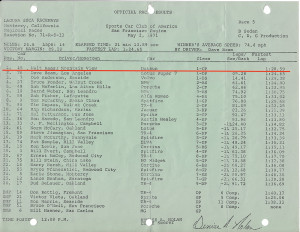
HLS30-19927 won its very first race on May 2, 1971 at the hands of Walt Maas. This was the first win of many by Maas in a Datsun, which would ultimately lead him to the driver’s championship in both SCCA C-Production and IMSA GT in 1974 (different Z car).
In the countless hours researching my cars, a natural and relatively unintentional result was that I started learning more and more about other racing Datsun of the period. A picture of my car would include another, the livery, setup, body configuration, driver name would be embedded in my mind. I was inadvertently forming a US-focused Datsun road racing historical timeline in my head. Before I knew it, individuals were coming to me for information, documentation, and photos of cars or timelines that they were researching.
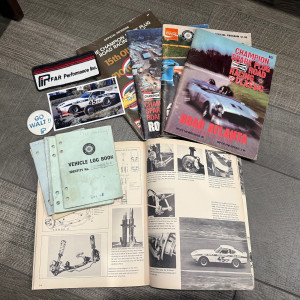
Old SCCA programs, the “How to Modify your Datsun” bible, SCCA vehicle log books,
racing memorabilia and an old period photo of HLS30-19927 in her first livery.
Over the last decade, together with other Datsun historic racing enthusiasts, we have found missing cars, unearthed priceless period photos, and brought back heartfelt stories of the racers of the day. What I am most proud of is that I have had the honor to be involved in the documentation and story telling of many of those involved in Datsun road racing history. Outside of just the factory teams, the glory days of Datsun road racing was built off the backs of the privateer. These are the very stories that I have shared as a writer for Japanese Nostalgic Car and many road racing editorials. I endeavor to continue and share many of these stories through s30.world. Outside of the people, that is the biggest reason why I joined.
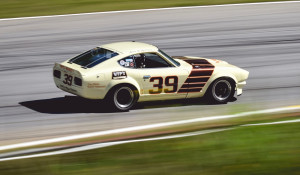
2018: HLS30-19927 after the first restoration with her VIPS Restaurant livery.
“The Mitty” with Nissan as the featured marque at Road Atlanta. Braselton, Georgia.
Through racing I formed many wonderful relationships - one is that of my friendship with OG Datsun historian Les Cannaday of Classic Datsun Motorsports. Although Les had already built a reputation for himself as the go-to shop in Southern California for all Datsun needs, most notably being directly involved in the late 1990’s Nissan Vintage Z factory-backed restoration program, his true passion lies in Datsun motorsports history. Similar to my Fairlady 240Z-L learning experience, I soaked in every opportunity and moment I spent with Les over the years, and was able to build my own Datsun historic archive of sorts in my head. While I am by no means affiliated with Classic Datsun Motorsports, I feel there are a few individuals who are equally important for having been responsible for moving the brand forward, not just from the 70’s but in modern days as well. Les Cannaday is one of those individuals - thank you Les for your support and more importantly, a good friend.
There are so so many others to thank for this insane Datsun historic racing journey I have been on. While only a small fraction of them may even read this, let’s give it a try: THANK YOU to Les Cannaday, John Morton, Sylvia Wilkinson, Casey Mollett, Randy Jaffe, Dave Stone, Walt Maas, Dolf van Kestern, Bill Eserini, George Kord, Barbara St. Lawrence, Terry Miller, Steve Epperly, Larry Oka, Rob Fuller, Troy Ermish, Peter Smith, Joel Anderson, Brad Frisselle and so many more. Now some of these individuals are no longer with us (rest in peace), and passed away in the decade or so that I have been researching all my cars. I am so happy to have been able to bring back some of their racing memories back to life, even if for only a moment. What many non racing enthusiasts do not realize is that racing is life for these people. They built so many wonderful memories at the racetrack and while working on their race cars. Whether it was because of who they spent that time with, or the success they had there. I share the same love for Datsuns and road racing as these wonderful people - we speak the same language.
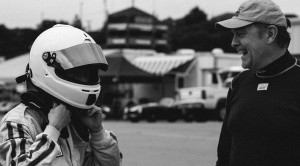
2017: Myself and Dave Stone. One of my closest friendships formed from vintage racing.
Stone meets me on all levels of Datsun history nerdom. HMSA Spring Classic at Laguna Seca, California.
Does this make me a Datsun US road racing historian? I don’t know, but one thing I do know is that while our expertise lies in different areas, it allows me to relate to other s30.world members on a different level.
Fueled by passion, an obsession with racing history, a relentless drive to compete, and lifelong friendships
In the Fall of 2024, now fellow s30.world member Jeff Agner had connected with me at a local event that I co-organized just before the 2024 Japanese Classic Car Show in Long Beach, California. Jeff shared s30.world’s vision for not just the platform but sharing the stories of not just those involved in the creation of the early Z car, but also those who helped continuously build the legend. S30.world saw the importance and impact the early Z chassis had on road racing in the United States, and how that helped pave the way for many years of road car fandom. Equally as much, I related to s30.world in that they did not just want to tell the story as it is often digested in media today, but from an unbiased global perspective. They held in high regard the importance of highlighting the vital details that should not be sacrificed at the mercy of time or social media influencers trying to get an extra “like” or “subscribe.” It was also my opportunity to reconnect with long time online acquaintances Endo-san and Alan Thomas. During a visit to Japan in February 2025, I met Endo-san for the first time in-person after many years. You would not have thought that we were simply online acquaintances after the quick friendship that developed, and him and his family spending his precious time with me. He made me aware of an event happening later in the year, where s30.world members would gather for their 2nd annual world tour in Nara, Japan. Of course I was interested, and when that formal invite came later that spring, I could not have been more excited. Fast forward to November 2025, I headed out across the Pacific Ocean, not knowing what to expect. From the moment I arrived at the Keihanna Plaza Hotel in Nara, and met the s30.world folks in the lobby, they were extremely welcoming to me. While there are articles that will cover the highlights of the trip, moments that really stood out to me in that week was the opportunity to spend time and break bread with global experts, see and feel the passion and proudness that the Japanese people have for these cars, experiencing the many different and wonderful variants of these cars that few of us from the US have experienced, and forming many new friendships. Reconnecting with Endo-san and Alan was also a pleasure - and I’m so happy to officially call them friends now.
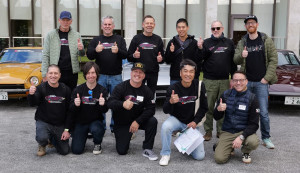
2025: S30.World Tour Japan Expedition - A trip that I will never forget, and met some of the world’s best people.
In our second to last dinner in Yokohama, Chris Visscher pulled me aside from the group and kindly asked what I thought about joining s30.world. No ego at all - he did not make it seem as if it was them allowing me into the group, but centered it around me accepting them. Without a second thought, I promptly agreed that it would be a great fit, and after some discussion with the s30.world team I was welcomed to the family! I look forward to sharing and documenting my knowledge here on s30.world, particularly in the area of Datsun & Nissan US-based road racing history. I endeavor to share the stories of not just of the factory works teams, but also those of the factory-backed and privateer racing efforts.
Glenn Chiou
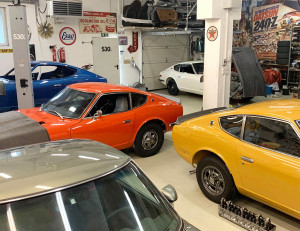
We love what we do Welcome to S30.world
It’s based in Utrecht and Budapest. In Utrecht we are only 30 minutes from Amsterdam Airport. There we have our showroom, parts storage and project car storage. In our showroom you will find of course restored S30’s but also several first paint Datsun 240Z’s. In Budapest the bodywork, most of the restoration and assembly takes place. Some components like engines and upholstery are mostly done in The Netherlands.